Taiwan Literature Base
臺灣文學基地· Historic site
About
The base stands within the Qidong Street Japanese dormitory cluster, one of the few areas in Taiwan where historic buildings are preserved most completely. It was among the first Japanese dormitory clusters protected as a whole area under the Cultural Heritage Preservation Act.
Read more
The area contains one city-designated monument and nine historic buildings. It holds many local stories and links with residents' lives, and shows what it means today to revive and reuse one of the last Japanese dormitory clusters left in Taipei. In the grid-like centre of Taipei, Qidong Street curves like a casual smile between Jinan Road and Zhongxiao East Road. More than 200 years ago, in the Qing dynasty, it was an old road leading to Songshan and on to Keelung, known as Sanbanqiao Street. The area was then paddy fields and ponds. Among the canals, fields and ponds, the still unnamed Qidong Street wound its way and carried rice, coal and other daily goods. Between 1920 and 1940, under Japanese rule, the Government-General built Japanese-style residences for civil servants here, today's Qidong Street Japanese dormitory cluster. At the same time, companies and factories of various industries gathered in the area and commerce grew. This led to the founding of a local association, the 城東會, which often held community talks, theatre, performances and film screenings, creating a wave of arts activity at the time. After the war, the government kept using the area as housing for central government officials. Major General Wang Shuming, then deputy commander of the air force, moved into No. 27, Section 2, Jinan Road. He later became commander of the air force and chief of the general staff at the defence ministry, and moved out of the residence in 1992. The old Japanese house is marked as the "General's Residence". After 2000, with rapid development in the city centre, the Japanese dormitories faced demolition. Residents of the local Xingfu neighbourhood, attached to the buildings, the old trees and the surroundings, formed the 齊東文史工作室 in 2002. Through the efforts of residents, experts and scholars, nine neighbouring terraced Japanese dormitories were preserved as historic buildings, described as "an important and priceless historical and cultural asset of the citizens of Taipei". As new houses, schools and factories were built, Sanbanqiao Street gradually disappeared from the map, leaving only the curve between Jinan Road and Zhongxiao East Road as a reminder that it once existed. In 2011 the Ministry of Culture asked the Taipei City Government's cultural affairs department to restore the Qidong Street Japanese dormitories at Nos. 25 and 27, Section 2, Jinan Road, and named the historic building the Qidong Poetry House. In July 2014 the National Taiwan Literature Museum took over its management and began running exhibitions and literary events. After five historic buildings on Lane 53, Qidong Street were restored, the Taiwan Literature Base, devoted to innovation and cultural heritage, opened on this curving lane in 2021.
Translated and shortened by DealTaipei from Taiwan's national tourism database. Sources are on the terms page.
Facts and sources
- Names
- EN Taiwan Literature Base中文 臺灣文學基地한국어 대만 문학기지 Chinese from the listing; English by DealTaipei
- District
- Zhongzheng District · 中正區 Tourism Administration listing, updated 2026-06-25
- Opening hours
- Not in the listing Tourism Administration listing, read 2026-09-30
- Phone
- (02)23279657 Tourism Administration listing. May be Chinese only
- Data
- /api/sight/taiwan-literature-base.json The same facts as JSON, for apps and AI agents
Getting there

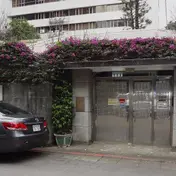 Kwoh-ting Li's Residence Historic site · 100 m away
 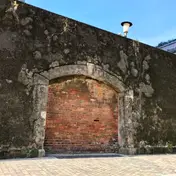 Remains of Taipei Prison Wall Historic site · 950 m away Taipei City Wall-East Gate Historic site · 1116 m away
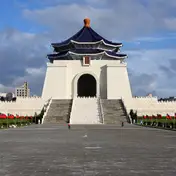 Chiang Kai-shek Memorial Hall Historic site · 1131 m away National Taiwan University Hospital West Site Historic site · 1139 m away
 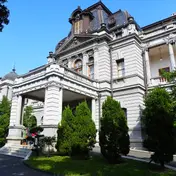 Taipei Guest House Historic site · 1188 m away
 Sources and photo credits are on the terms page.