Bangka Lungshan Temple
艋舺龍山寺· Temple
About
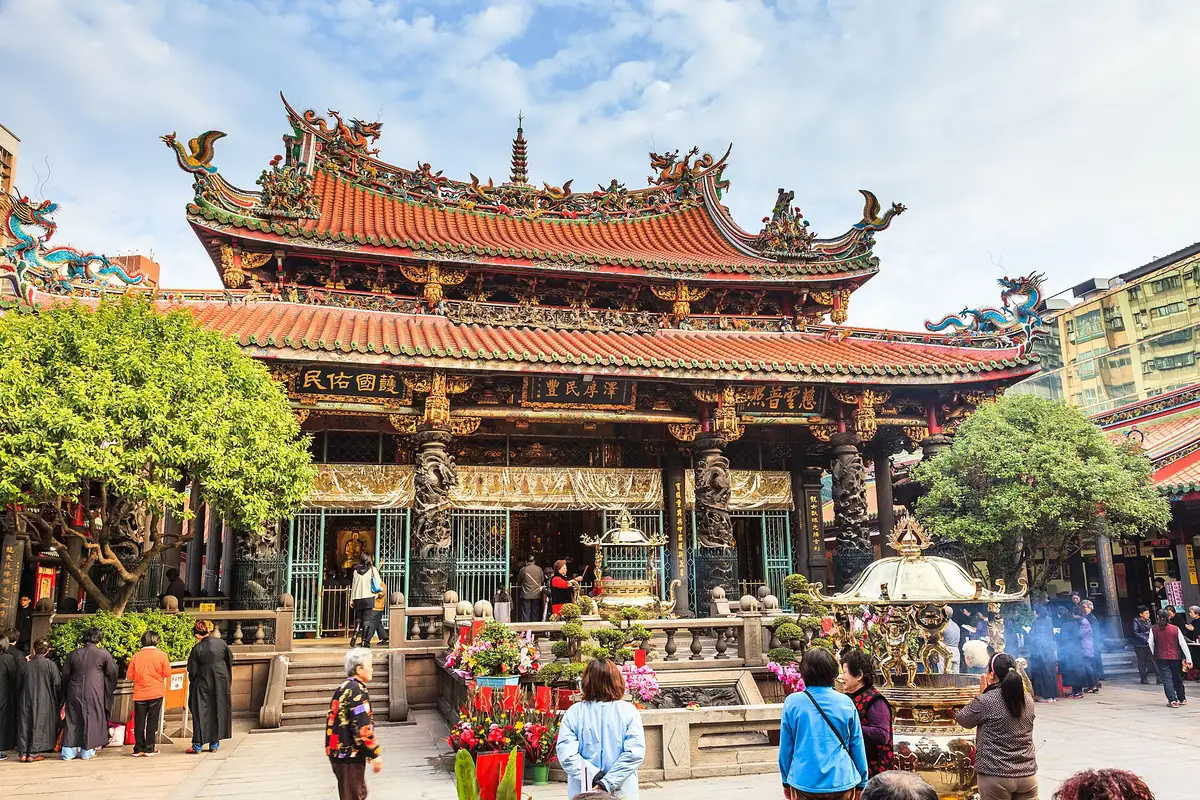
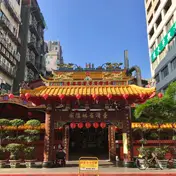
Bangka Lungshan Temple was rebuilt after an earthquake in 1815. Before its front hall stands the only pair of cast bronze coiled-dragon columns in Taiwan, and when a 1945 air raid destroyed the main hall, the statue of Guanyin stayed seated on its lotus throne. It was listed as a second-class historic site in 1985.
Full description, from the tourism database
When first built, the temple was large and finely sculpted. It was rebuilt after a major earthquake in 1815 (the 20th year of the Jiaqing reign) and repaired again after a storm in 1867 (the sixth year of the Tongzhi reign). In 1919 termites damaged its beams, and the abbot at the time, Master Fuzhi, led the fundraising for repairs by donating his life savings of more than 7,000 yuan. That rebuilding set the scale of the temple seen today. In 1945, during the Second World War, an air raid destroyed the main hall completely, but the statue of Guanyin remained seated on its lotus throne. In earlier raids, residents had sheltered beneath the statue's lotus seat, but on the eve of this raid they had gone home because of swarms of mosquitoes, so no one was hurt when the hall was destroyed. Residents believed that Guanyin had protected them and spread the story, and this miracle made Guanyin a central source of spiritual support for the people of Mengjia (Bangka). The temple faces south. Its plan forms a square within a square, a classical Chinese palace-style complex of three halls around courtyards, made up of a front hall, a main hall, a rear hall and side wings on the left and right. The front hall is 11 bays wide and is divided into the Sanchuan Hall, the Dragon Gate Hall and the Tiger Gate Hall. In front of the Sanchuan Hall is a pair of cast bronze coiled-dragon columns, the only pair of its kind in Taiwan. The front wall panels combine granite and bluestone, and their carved scenes, mostly taken from Romance of the Three Kingdoms and Investiture of the Gods, are meant to be instructive. The main hall has a double-eaved hip-and-gable roof, and the corridors on its four sides are formed by 42 columns. Its outer walls carry stone-carved inscriptions by several well-known calligraphers. Inside, the spiral caisson ceiling was built without a single nail, entirely from interlocking brackets (dougong). The rear hall also has a double-eaved hip-and-gable roof and is where Confucian and Taoist deities are worshipped. The side wings each have a bell tower and a drum tower, for the morning bell and the evening drum, with distinctive flattened hexagonal roofs shaped like the tops of sedan chairs. The roof ridges and flying eaves throughout the temple are shaped as dragons, phoenixes, qilin and other auspicious creatures, and decorated in brightly coloured cut-porcelain mosaic (jiannian) and Koji pottery. In 1985 the government listed the temple as a second-class historic site under national protection. The temple also built a cultural plaza building on Wenhua Road in Banqiao, which opened in 2005 and runs courses and lectures to spread Buddhist teaching and promote public education. Each year the temple holds festivals, ceremonies and folk events, such as a lantern display in the first lunar month, the Buddha-bathing festival in the fourth month and the Ullambana ceremonies in the seventh month.
Translated and shortened by DealTaipei from Taiwan's national tourism database. Sources are on the terms page.
Facts and sources
- Names
- EN Bangka Lungshan Temple中文 艋舺龍山寺한국어 멍자 룽산사日本語 艋舺龍山寺 Wikidata Q706761, Chinese from the listing, Korean by DealTaipei (NIKL transcription)
- District
- Wanhua District · 萬華區 Tourism Administration listing, updated 2026-05-27
- Opening hours
- Not in the listing: see the official site Tourism Administration listing, read 2026-09-30
- Phone
- (02)23025162 Tourism Administration listing. May be Chinese only
- Official site
- lungshan.org.twWikidata
- Data
- /api/sight/bangka-lungshan-temple.json The same facts as JSON, for apps and AI agents
Getting there



Wikidata (CC0). Sources and photo credits are on the terms page.